
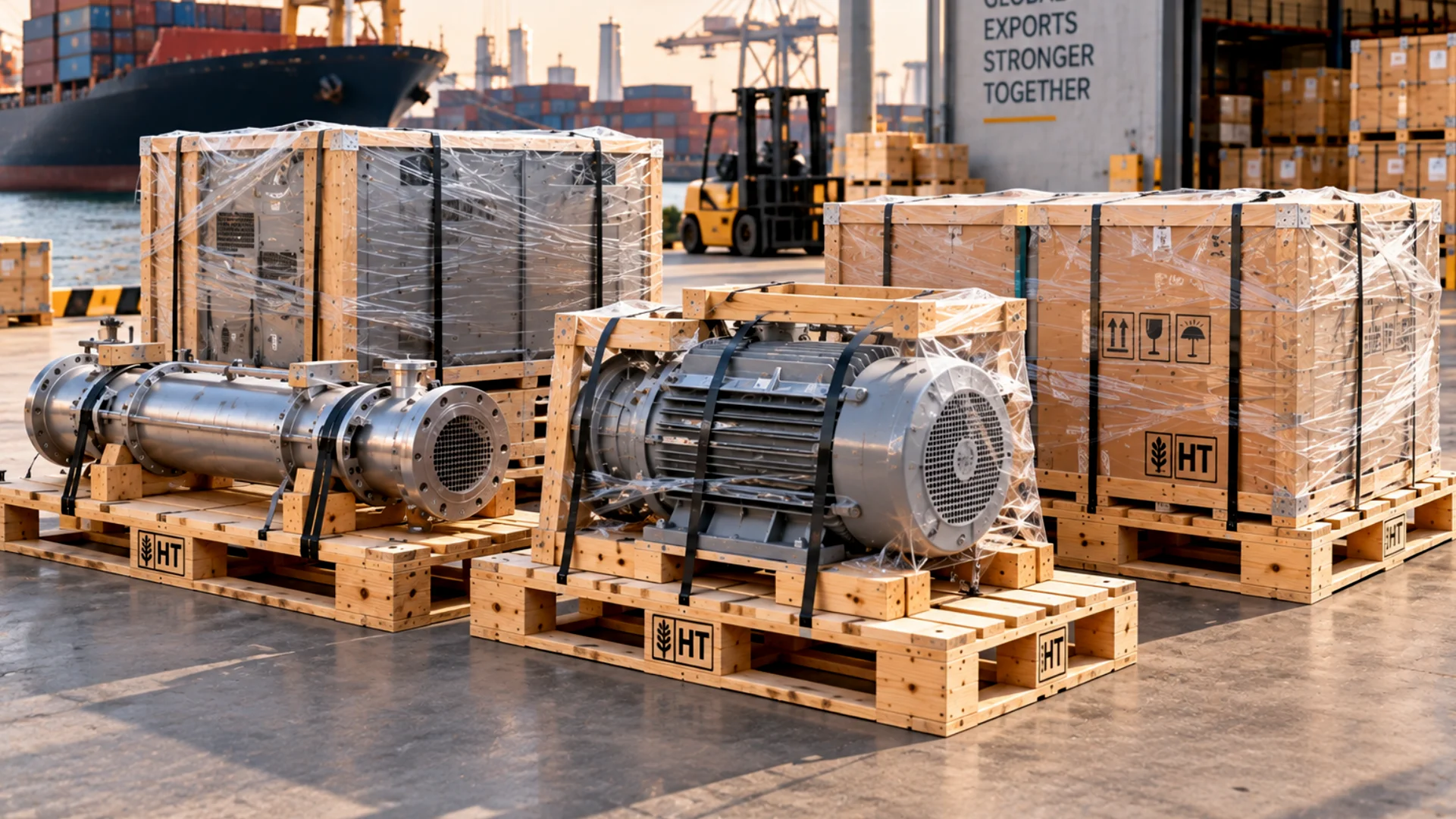
A slatted wooden pallet is the default in most Indian warehouses, and for drums, sacks and heavy single items it is the right choice. For electronics it usually is not, and the reasons only become visible after the consignment has moved. This guide explains when a plywood pallet for electronics is worth the extra cost, what a slatted deck actually does to cartoned goods, and how to specify wooden packaging for the electronics industry so it survives handling, storage and sea freight.
A slatted pallet supports the load on boards with gaps between them. That is efficient and cheap. It also creates four specific failure modes with electronics loads.
|
Deck type |
Surface |
Relative cost |
Best for |
|
Slatted pine deck |
Gaps between boards |
Lowest |
Drums, sacks, machinery, single heavy items |
|
Part plywood deck |
Plywood panels over key areas |
Moderate |
Mixed loads where only some cartons need support |
|
Full plywood deck |
Continuous flat surface |
Highest |
Cartoned electronics, small components, clean handling |
A plywood pallet with a continuous deck on pine bearers gives you the flat surface where it matters and keeps the cost sensible. Full plywood construction throughout is rarely necessary.
Timber packaging carries moisture, and moisture in a sealed container is the most common cause of damage to electronics in sea freight. As the container heats and cools, moisture evaporates from the wood, condenses on the container roof, and rains back onto the cargo. Corrosion on connectors and mould on cartons follow.
Three practical controls:
For any consignment leaving India, timber packaging must comply with ISPM-15. Two treatments are in common use, and for electronics they are not equivalent.
|
Heat treatment (HT) |
Methyl bromide (MB) |
|
|
Process |
Timber heated to a core temperature of at least 56°C for a minimum of 30 minutes |
Chemical fumigation |
|
Residue |
None |
Chemical residue; a concern for sensitive goods |
|
Acceptance |
Accepted everywhere |
Banned or restricted in several markets, including the EU |
|
Suitability for electronics |
Preferred |
Generally avoid |
One detail that saves money and is widely misunderstood: plywood, OSB and particle board are outside the scope of ISPM-15, because the heat and adhesive used in manufacturing them already eliminates the pest risk. The solid timber framing, bearers and battens in the same unit are not exempt. So a plywood box on a treated pine frame is fully compliant, and often cheaper than an all-solid-timber equivalent. See our ISPM-15 guide for how the marking works.
Work from the carton footprint outwards. Lay out the pattern on paper, count the units per layer, and size the pallet so that no carton overhangs the deck. Overhang is the single biggest cause of crushed bottom-layer cartons, because an unsupported edge carries the whole stack above it.
Where the carton pattern leaves an awkward gap, it is usually cheaper to adjust the pallet dimension than to redesign the carton — which is exactly the sort of change a smaller pallet manufacturer can make and a large one generally will not.
For high-value instruments, populated boards or anything that cannot take a knock, a pallet plus stretch film is not adequate protection. A closed plywood box with internal bracing gives you a rigid six-sided enclosure, and the incremental cost is small measured against the value of what is inside.
|
Blue phrase in the text |
Link to |
|
plywood pallet |
/products/wooden-pallets/plywood-pallet/ |
|
plywood box |
/products/wooden-boxes/plywood-box/ |
|
ISPM-15 guide |
/products/ispm-15-heat-treated-pallets/ |
|
pallet manufacturer |
/products/wooden-pallets/ |
|
(add in intro) |
/industries/electronics/ |
|
(add in closing) |
/get-quote/ |